
Gone to Carolina, Part Two
Recent (and not-so-recent) reflections of going to camp in Western North Carolina.

For some context, check out Gone to Carolina in my Mind from November 2024.
If you’d rather listen to this essay in a browser or as a podcast, click the audio voiceover (“listen to post”) above. Read this if you need instructions on how to listen to episodes on your podcast app.
If you’re reading this in your inbox, you can find a shareable, web-friendly version at ashleighellskells.substack.com, where all my other essays and podcasts live. You can request to follow me on Facebook here and Instagram here, and I’m happy to hear from you at aellsworthkeller@gmail.com.
Subscribers: If your inbox clips this message, you can simply click on the web address above and read it that way.
When I say that I “grew up in the Carolinas,” I sincerely mean both of them. Yes, I was born in South Carolina and lived there for 20 years. But I spent my college years in North Carolina (Go Deacs!) and every summer during that time (plus a couple) in the mountains of North Carolina.
North Carolina was the first place I lived that wasn’t chosen for me, and that is perhaps its biggest significance of all. No matter how many years I’m away, no matter that it’s been more than 20 years since I lived there, North Carolina will always be a part of me.
Last month, I went back for nearly two weeks, my first time since 2020. It was for a work trip with a few extra days tacked on to visit family in South Carolina. It was peaceful and glorious and not nearly long enough—I definitely didn’t get to see everybody I would have liked!—but with a family back home, two weeks is a long time to be solo across the country.
Five years since my last visit is a long time, too, but I haven’t actually lived there since I was 23 years old. I spent six summers (in college and after) working at two camps near Asheville and Boone, Lutheridge and Lutherock. Even when I’d finally decided that it was time to move on, I was still reluctant to go. I stuck around as long as I could, delaying my arrival to my next destination by one week so that I could attend a camp wedding.
And then on a July day in 2003, I said goodbye to my best friends, and less than 24 hours later my mom and I were on the road to Arizona, my new home.
In the ensuing two decades, the amount of time I’ve been back to North Carolina at all has been minimal, especially compared to what it had been before. Living in Arizona, then Vermont, and now Washington, it’s not exactly easy to visit. But every time I do it feels like coming home.
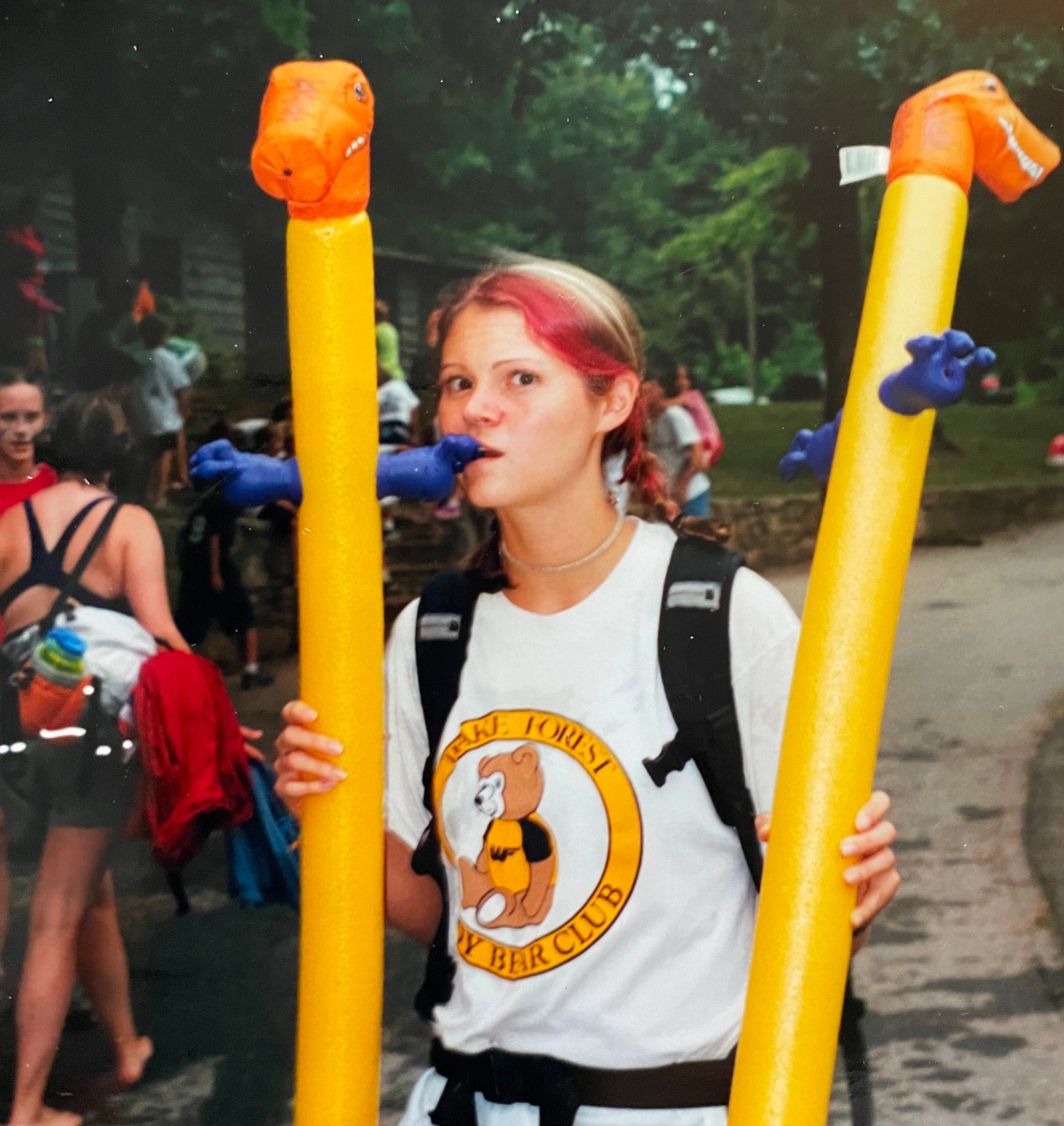
For all the years I spent as a camper and summer staffer and year-round staff member at camps, I’ve hardly written much about them, outside of my own personal journals or reflections. Anyone who loves camp knows: experiencing one week of camp is like living through an entire year. Capturing any of it feels nearly impossible.
From ages nine to eleven, I would spend one week of my summer at Lutheridge, the best week of the whole year. There was four-square and canteen and candle-making and singing and jello and crazy counselors and seeing the Bible in new ways and so, so much laughter.
When I was twelve I started going for two weeks, and then when I was fourteen I added a week at Lutherock into the mix. One glorious summer, right before I turned 17, I got to spend three weeks at camp, which included a week of rockclimbing at Lutherock, a week backpacking on the AT and canoeing the French Broad River at Lutheridge, and backpacking another section of the AT and whitewater rafting the Nolichucky back at Lutherock.
Those were just the camper years. As I wrote earlier, I worked at those camps for six summers, and then I would go back for a week or two for the next few years to volunteer. A few years later, I would start my ten-year tenure as Director of Camp DREAM in Vermont (yes, it was a year-round job, the answer to that most annoying question), so I have a whole slew of tales about that time in my life that I’ve barely touched on. And now, I’ve been at Camp Lutherwood here in Washington for a year and a half; that story continues to be written in real time.
There are hundreds of people and hundreds of stories. All of these little moments that, taken together, make up an enormous part of who I am. How could I possibly capture that?
I can’t, not really. But here are snapshots:
Age nine, when two other girls and I were trying to find a shortcut back to our cabin and we “accidentally” snuck past the boys’ window in Luther Lodge, and they yelled “There are girls looking in our window!” and their entire cabin of nine- and ten-year-old boys ran out the door and chased us, enthusiastically (Lutheridge 1989).
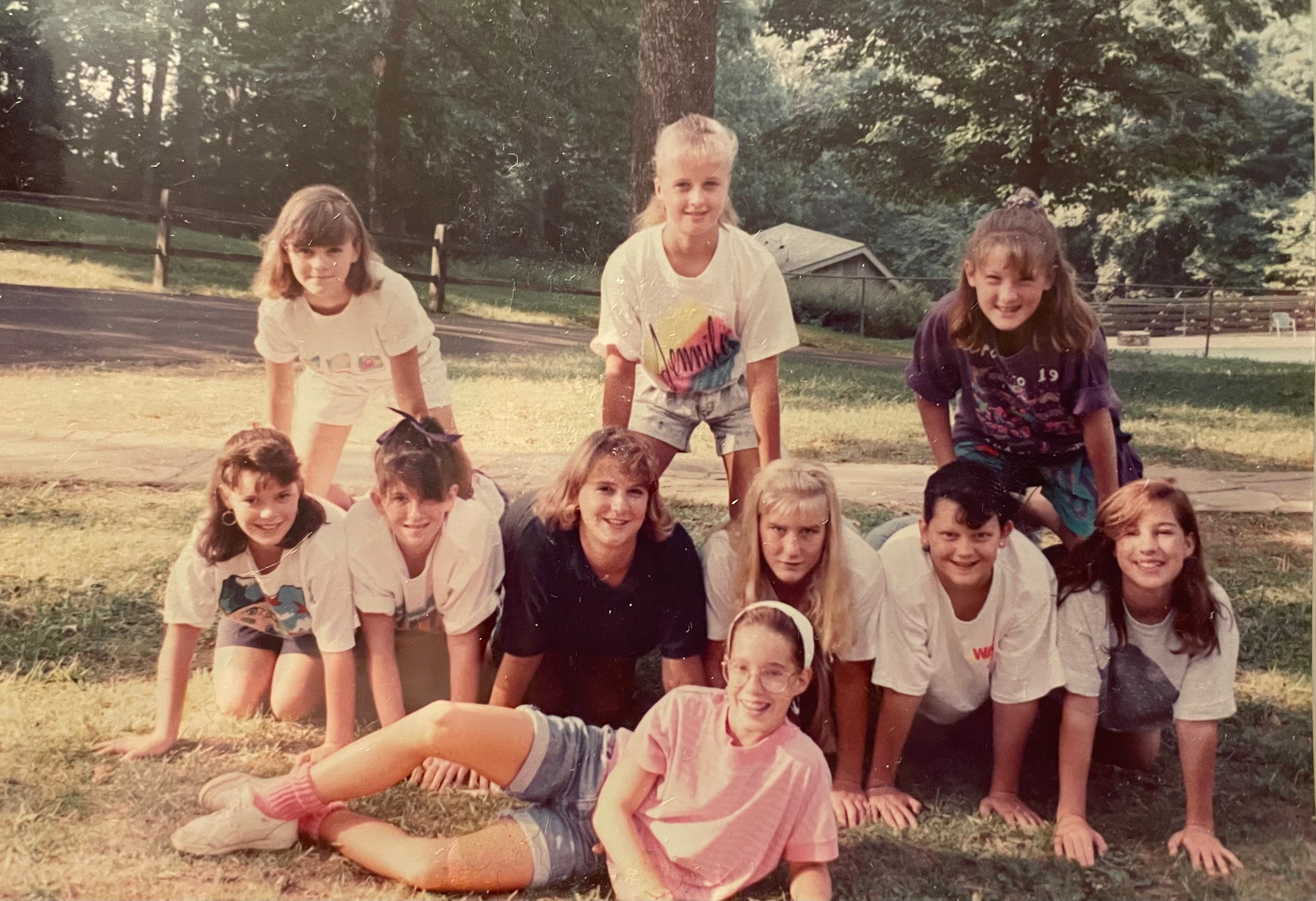
Age 13, at the camp dance in Upper Crafts, when all us middle schoolers were dancing up a frenzy to House of Pain and Kris Kross (or waiting for a boy to ask us to slow dance to Mr. Big or “Wonderful Tonight”), and this one girl was sticking her head in the water fountain to cool off and then swinging her wet hair all over us, to our great dismay (didn’t she know that we had worked really hard to look good for this night?) and the next year when me and my best friend saw her walk up to us at Beam Cottage, we whispered to each other, “That’s that obnoxious girl from the dance!” and she said, “Hi! I’m Katie!” and at the end of the week we all left as best friends and have been ever since (Lutheridge 1993 and 1994).
Age 16, the first time I climbed any rock, this one being Cross Rock, my fingers grasping and my toes clinging, using muscles in my arms and legs and back that I didn’t know existed before, trusting my counselors and fellow campers to keep me up, and that powerful feeling of accomplishing something completely new and unexpected (Lutherock 1996).
Age 20, with my camper Lauren, and our canoe overturned in the middle of the biggest rapid on our section of the French Broad River, spilling us both out, and a rock gashed my left knee, where the scar—which is not my only scar procured at camp—remains 25 years later (Lutheridge 2000).
Age 21, during the Polar Bear Skit, and Travis uttered the line, “I’m a dry chicken sandwich!”, an inside joke in reference to the grilled BBQ chicken we ate every week that had been boiled first, all of it ridiculous and memorable to only us (at least at the time; I’m the only one who remembers this anymore!) (Lutherock 2001).
Age 23, the Fourth of July Parade, and my small group of middle school campers and their counselors dressed up as the “Ashleigh Fan Club” and I donned a shirt that said “I’m Ashleigh!” and it was the silliest, sweetest thing, and I felt like I was on top of the world, especially since I understood that this would be one of my last weeks there ever (Lutheridge 2003).
These are just a few, and they’re probably not even the best ones.
But it’s not all roses, either. Assuming that camp is a magical place (which it is), set apart from the rest of the world (which can be), but that it’s safe from the dangers and realities on the outside can be a dangerous thought. For me, there are plenty of downsides I’ve had to reckon with over the years; working at camp (vs. attending as a camper) means that the curtain will be pulled back and your dreamy, idealistic view might get turned upside-down. It’s not something that can be prepared for, but it’s a necessary step in realizing that the magic isn’t simply organic; some of it has to be manufactured. It’s hard work, it’s up to us to do it, and sometimes we fail.
There was the worst cabin of my life (teenage girls can be brutal, even to their amazingly cool counselor). There was the middle school boy at the pool who wouldn’t stop staring at me in a bathing suit, even though I was way too old for him. There was the drunk man at Sliding Rock who was harassing my campers and then tried to grab me when I placed my own body between his and theirs. He was so drunk, he slipped and fell on the rock as he reached out for me. I was so scared, I did not even look back.
There was the anger and “Why, God?” when good people were fired by a bad apple, upending my understanding of safety and sacredness and sending the organization (and its people) into turmoil that they are only now recovering from. There was a fellow first-year counselor whose understanding of the Bible was far more narrow than mine, who had come from an Evangelical faith tradition, and who, in short period of time, twisted my religious views, convincing me that I deserved every bad thing that happened to me, including that I was seeing demons in my bed and that decisions I made back at college were orchestrated by Satan himself (yeah, that’s taken some unpacking).
Worst of all, there were the ridiculous expectations of finding a life partner and “soulmate” in the camp setting, the neverending comments from those who came before us who told us this was our fate, and the slap in the face that after meeting some of the best people of my life at camp, I would meet the worst person of my life there and live to regret it.
Camp is and is not a place apart. It is special and magical and sacred, but it’s not immune to the realities of the real world. The important part is that places like camps try to be better than the outside world. But the even more important part is admitting they are wrong when they have failed to be better.
Going back to Western NC is always meaningful to me, no matter how much time I’ve been away. Coming back a year after Hurricane Helene was another thing.
I knew that Helene had wrought significant damage to the Lutheridge property. I had seen the pictures: images of tangled trunks and vines and limbs, mountains of dead leaves still attached, and an occasional snippet of a sign or a piece of road that almost helped me understand what I was seeing. But it wasn’t until being there in person that I could really grasp the extent of the damage.
The funny thing (not funny “haha” but funny interesting) is that most of the cabins and structures were completely fine (well, almost: RIP Beam Cottage, I’ll miss your wonderful gathering room and the stories it could tell, and even the bathrooms, where the showers magically—or disgustingly—grew mushrooms).
Many of the earliest structures are simply old, and some were falling apart from the ravages of time, not a hurricane. There’s something sweet and endearing about going into a bathroom (I’m looking at you, Mission Hall basement) and realizing that it looks exactly the same as it did in 1991, which was exactly how it looked perhaps all the way back to when the building was erected, mid-century.
The worst areas hit were, ironically, the sections with few buildings but many trees. Because of encroaching development on all sides (Airport Road and Hendersonville Road forming the top of the triangle around the hundred-acre property, with neighborhoods on the bottom), the edges have been chipped away over the years. At least the center of camp was a mass of woods, thick and dark and still hanging on to the coolness that that kind of canopy can bring. At least, until Helene wiped a lot of it out.
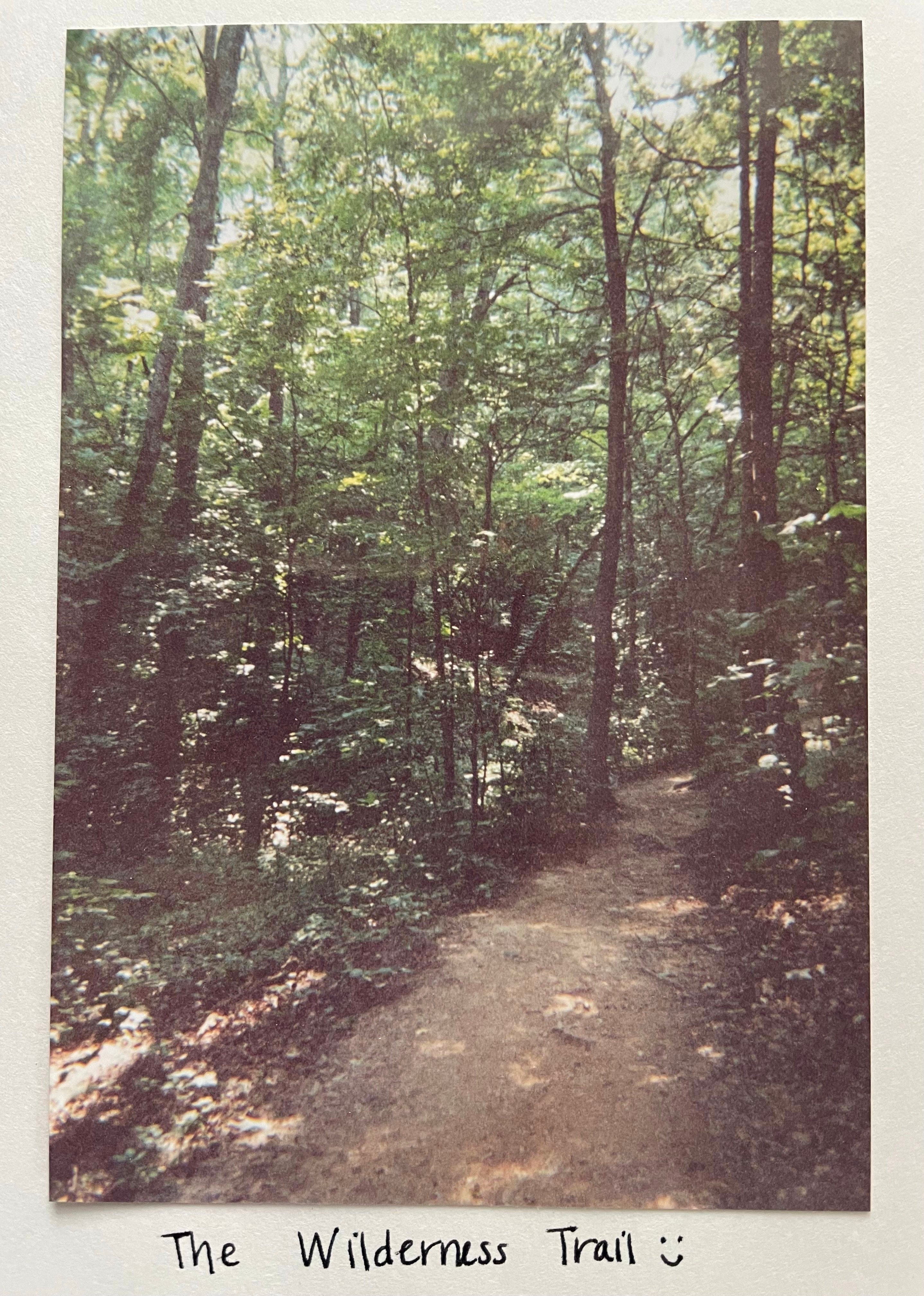
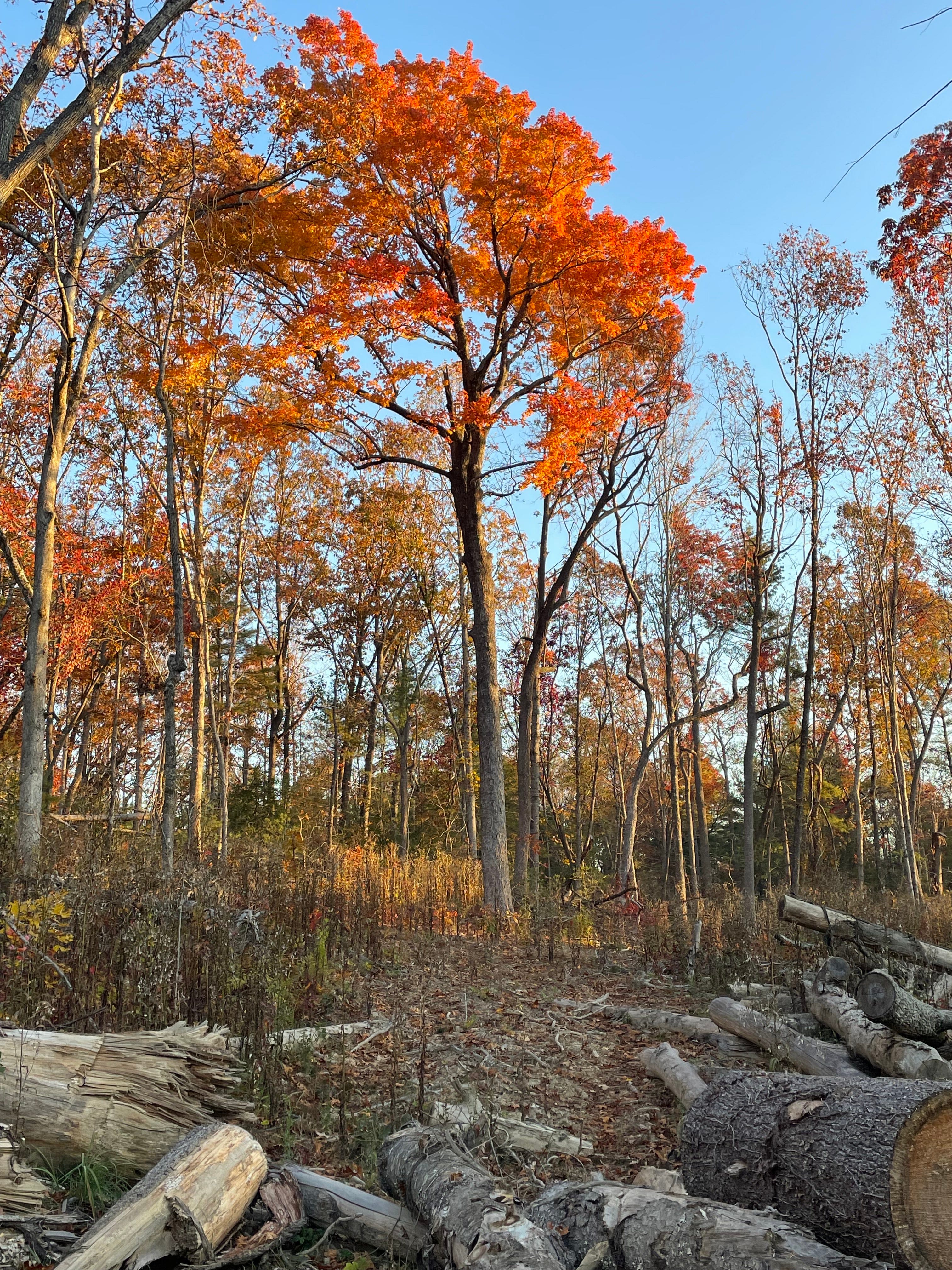
But I also remember how the forest, even twenty years ago, wasn’t terribly healthy. Unlike the deep green woods of Vermont and the even deeper, greener, drippier forests of Western Washington, I’m afraid that I can’t call the trees and the woods dotting the Lutheridge property “picturesque” overall. They served a purpose, and that counts for something, but summers in Western NC were becoming hotter and drier, and the aforementioned development around the perimeter took away a cooling shield. There was a lot of underbrush already, a lot of invasive ivy.
As a casual observer, it looked like the management of the forest was no management at all. From my time living in Arizona, I know that this isn’t a viable option anymore; wildfires are not limited to the drier Western states. It’s a miracle that fire hasn’t been the element that caused so much destruction there—yet.
Now that that cooling center of camp has been decimated, sunlight is reaching the forest floor, the ground is even hotter, and scrubbier plants are springing up, fulfilling the natural cycle of regrowth and rebirth but also providing fodder for a potential fire disaster down the road. Piles of trees remain, due to the sheer volume of it all, but once the storm is cleaned up once and for all, it will be vital to have a real plan to improve the health of the forest that is left.


One of the strange bonuses for me (maybe?) of traveling across time zones is the insomnia that comes with it. I can’t fall asleep and I can’t stay asleep, so I’m up before everyone else, and I get to see the sunrise, and at breakfast I brag about seeing the sunrise, because it’s so beautiful and holy, isn’t it?! (Then I crash and take a perfect, precisely timed 20-minute nap. Yeah, I’m annoying).
In the darkness of the early hours, I wait impatiently until it’s light enough to see more than a few steps in front of me (there are bears out there, I’ve seen ‘em!), and I head out to run the loop around camp. Twenty-plus years ago I ran it a few times a week, looping twice, heading up the Wilderness trail and hopping on the Quiet Way up to the Chapel, then behind Kohnjoy Inn and Bacot Cottage and then across the cut of the back entrance, back up to the road across from Beam, where I would follow the road back to my area, Wilderness. It wasn’t really more than a 20-minute trek, but took me around the whole camp, when everything was quiet and campers weren’t even awake yet.
Even back in 2002 and 2003, the Quiet Way was hardly quiet, what with its proximity to the nearby development. But there were parts of it that felt like they hadn’t been traversed in years. Like a lot of special things about camp, this ill-maintained trail felt like my little secret.
Now it’s chopped up, either by the hurricane or construction; that one section by the back entrance is almost nonexistent now, making way for a giant gas station. I wonder if anyone else will miss it like I do, or even notice.
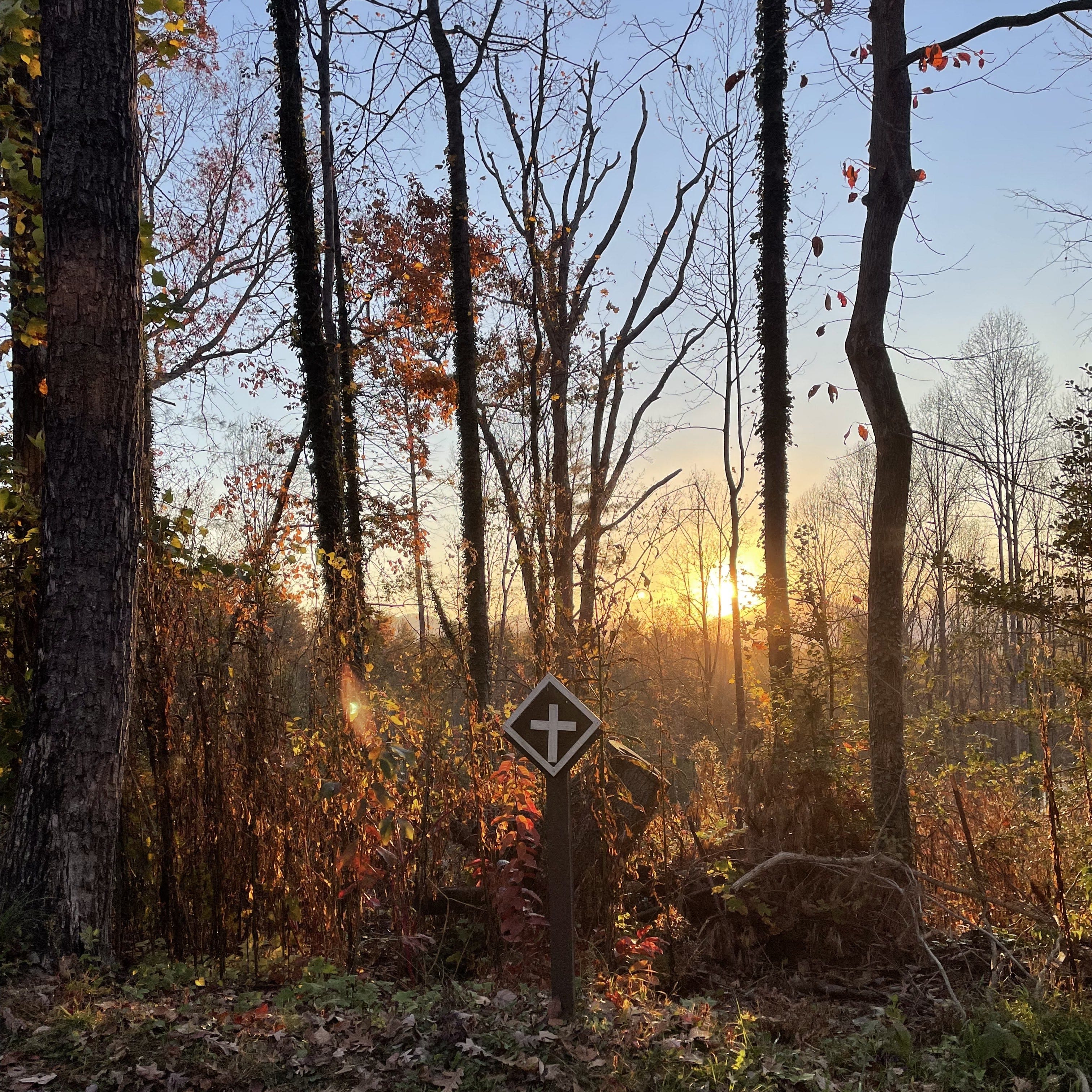
On this November morning, I still ran most of the same route, needing to skip the most wooded sections because they’re weren’t passable yet, and in the quiet of the morning stopped every hundred feet to pay homage to important sections of camp: Pioneer A, which is mostly gone to make way for new cabins, Pioneer B, which felt smaller but still intact, Lakeside Lodge, the home of Sunday night vespers, and, of course, Wilderness, the place that feels like it will always be just a little bit mine.
Summer of 2002, I lived down in the basement apartment of Bischoff Hall, a damp little space with an old bed and donated dresser and an occasional mouse and a bathroom that had a window in the shower that opened out into the courtyard where campers would gather for games. Nothing fancy (perhaps a lot less than fancy), but many good things happened the summer I served as Wilderness Area Director: best friends, a boy, favorite campers, and redemption after real trauma.
So when I go back to Lutheridge years later, in 2018, and 2020, and 2025, I always walk by Wilderness, and that incredible summer comes alive for me. I remember sitting on the low courtyard wall watching campers play and gossip during canteen, or late at night having conversations with fellow staffers, or that one Saturday night eating popsicles with my new boyfriend and our mutual best friend and wondering which one of us was the third wheel (answer: it was complicated).
In two of those lower windows in Wilderness are the heart-shaped vinyl stickers I put there; they were part of a Power Puff Girls assortment that I bought on a whim. Those stickers have been there for 23 years.
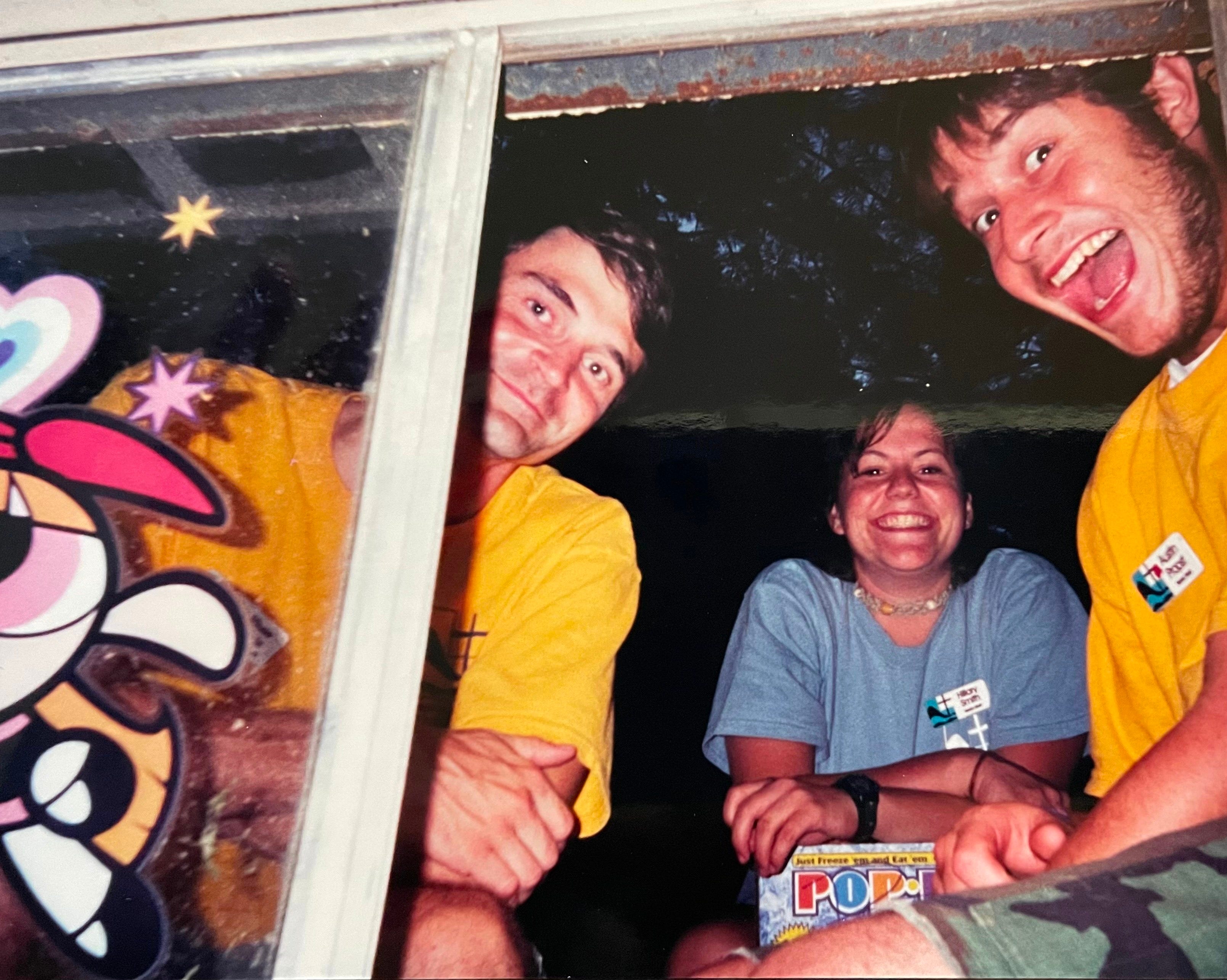
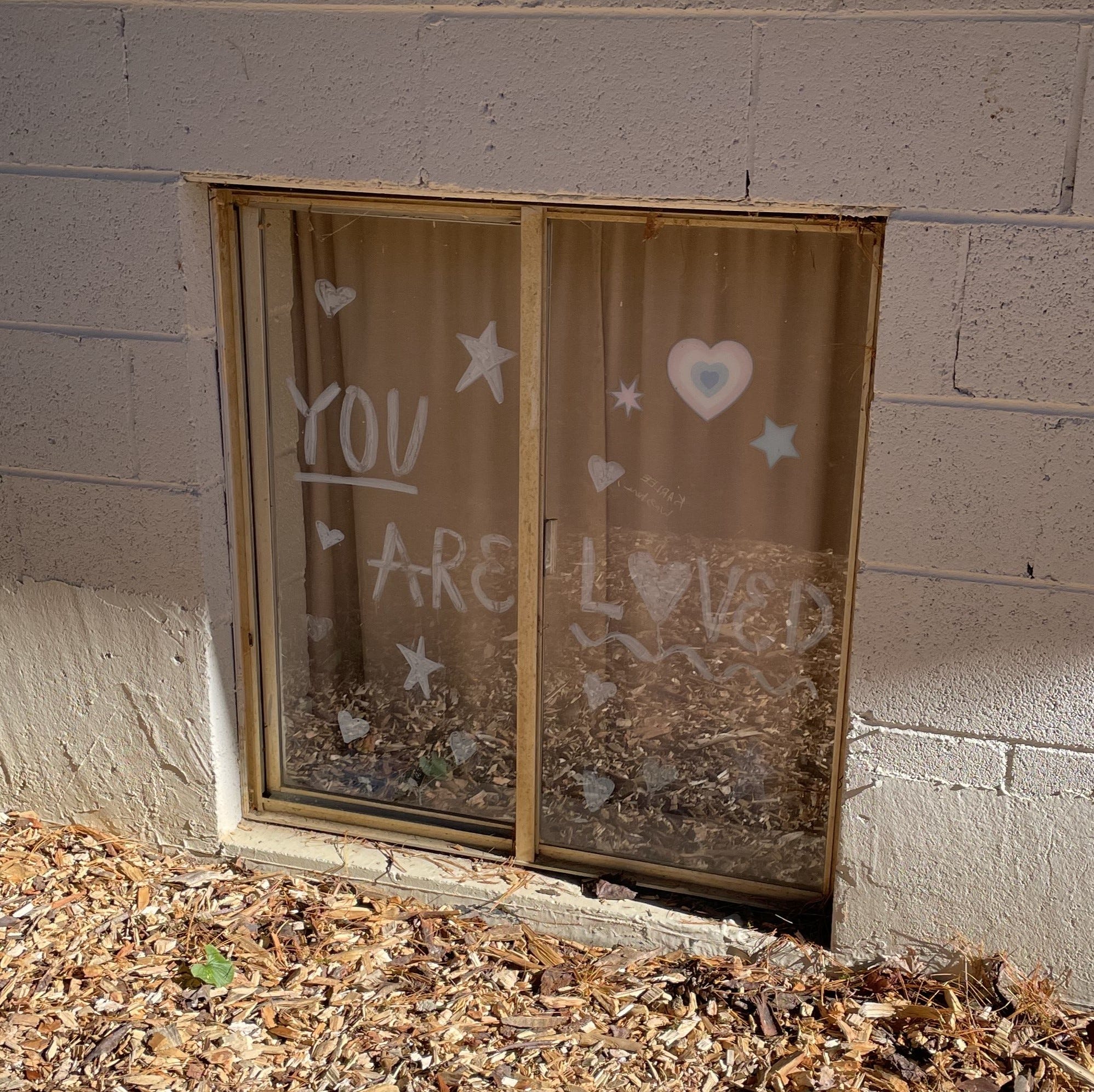
Why do I get so excited to see little pieces of faded pink plastic stuck on glass? My legacy in this place is much bigger than that, or smaller, if you think about it. When I see those stickers on the window, I remember being 22, and all the happy things from that summer. I could truly be myself, and people loved me for it. It doesn’t get much holier than that.
Except maybe the sunrise. Did you see it?!?
Is home just a location; some buildings, some trees, standing or not? Is there a Genius Loci that gives meaning to a place (perhaps at a Christian camp, God is the genius loci)? Perhaps it’s that the people there give it meaning and make it feel like home.
But if that’s the case, does that mean that place is only the catalyst, the medium, the conveyor? Does the land we are on have no meaning unless we are there? It’s a question that I don’t have an answer for. All I know is that sometimes magic happens in certain places. And magic happens with certain people, too.
This trip, I got to see nearly two dozen friends I hadn’t seen in five years or more, some I consider my best friends, all of whom I’ve known for at least 20 years and in some cases, more than 30. These are people I’ve shared laughs and tears with, deep conversations about friends and love and family and faith and lack thereof. (And there’s nothing quite like the bonding that comes from being in a camp skit together, and you know I’ve been in some SKITS with all of these people)!
One of my best friends, Naomi, who I’ve been friends with since we were counselors together, drove me around and drank Cheerwine slushies with me and we caught up on all the big changes at camp and in Asheville; the bad, and the good, including some great “new” restaurants (if they opened anytime in the last two decades after I was on staff, they’re “new” to me!). A trip to Sierra Nevada Brewing, where she serves as Brewery Chaplain (yep), was essential.


Taking my best friend Katie (remember that girl from the dance?) back to Lutheridge for a walkabout where she pretended she was supposed to be there for my conference (these kinds of shenanigans being par for the course when we’re together) brought about the revelation that the last time she was there we were with our other best friend, Laurie, and it was our last day of camp as campers: July 26, 1997.
We had said goodbye that summer day, two of the three of us not yet 18, and we went off to college—me to Wake Forest, Laurie to Elon, and Katie to the University of Tennessee—and life would never be the same. I didn’t cry when we realized this almost thirty years later; the enormity was too much to even process. Rather, I marveled in the full circle-ness of life and the fact that we got to be together, briefly, at a place that had brought us together three decades ago.
(I also just now realized that that last day of camp is the same day, 11 years later, that I would get married, just a few miles down the road. Laurie and Katie were bridesmaids).
I offered to lead a tour for about a dozen professionals from other camps (my new friends, who are awesome, too!) and I showed them spots where things happened and I told them stories, layers and layers of stories.
I got shown around by current Lutheridge staff who is doing the hard work of restoration and repair (in more ways that one) and saw the much-needed building upgrades that are happening on site (exciting, yes, but tempered by the feelings of loss of what was before), all while understanding, quite deeply, the challenges that face overnight camps in a world where kids aren’t spending the night at friends’ houses anymore, children as young as kindergarten have packed schedules all through the year, backpacking trips are far too big of a challenge for teenagers these days, and “church” isn’t what it once was in people’s lives.
Lutheridge has been through a patch of difficult years. “The Church” can (and has) inflict a great deal of pain on the very people it claims to support. The humanity of people can be seen in grace, more often than not, but there are significant times when it can be seen through the abuse of power, cruelty, and mismanagement of resources. This happened at Lutherwood, where I am now, too. We’re still coming out of those periods of time, not long enough ago to forget, but enough to see the path forward and know that a better tomorrow is on the horizon.
Just like those gorgeous sunrises cresting over swaths of fallen trees, there is beauty to be found in disarray, if you look for it.
But I still believe in the power of camp to bring people together, to show them another way, to open their hearts to belief, whether it’s a deeper belief in their own worth or belief in a higher power, honestly it doesn’t matter to me. Perhaps surprisingly, I’m not in the business of trying to “bring people to God”; I believe in the power of showing people that the “Kingdom of God”—the beautiful world we are stewarding—is now, and they shouldn’t wait for a real or imagined heaven to live the lives they (all of us, no exceptions) deserve.
And that while some of this is in our own power, the rest of it lies in community, and that one of those communities can be at camp, like it was for me.
Reflection Questions
Have you ever gone back to a home that’s changed? What memories did you have to unpack? Was the change better, worse, or neutral?
Is place meaningless aside from the people who make it meaningful? Or does magic actually happen in some places more than others?
Western North Carolina is home to just one state-recognized tribe, the Tsalaguwetiyi (Cherokee, East). But there are several other tribes throughout the region, including (but not limited to): S’atsoyaha (Yuchi), Miccosukee, Mánu: Yį Įsuwą (Catawba), Cheraw, Yesan (Tutelo), Moneton, Keyauwee, and Shawandasse Tula (Shawanwaki/Shawnee).
The Western North Carolina region is quite large; as far as square mileage is concerned, it’s approximately the same size as the state of Massachusetts. Because of this, this is likely not a complete list of all the tribes in the region (which also must include Eastern Tennessee). My apologies for any inadvertent omissions.
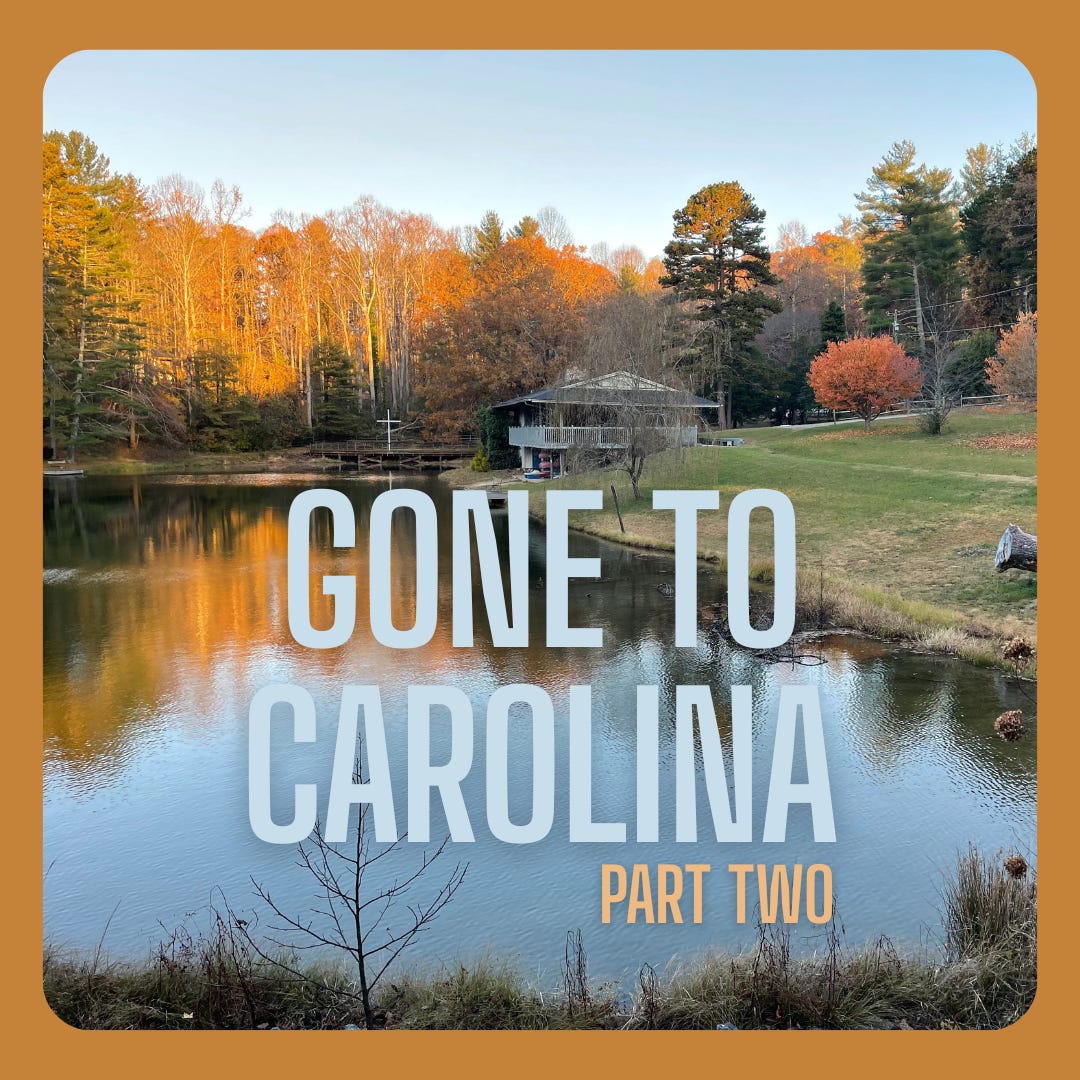
Image: Sunrise over Lake Lewthorne and Lakeside Lodge, Lutheridge, November 2025.
This could be the best one you've ever written. Touching and revealing. Love, Dad